How Shop Memory Care Homes Offer More Significant Senior Care
Business Name: BeeHive Homes of Plainview
Address: 1435 Lometa Dr, Plainview, TX 79072
Phone: (806) 452-5883
BeeHive Homes of Plainview
Beehive Homes of Plainview assisted living care is ideal for those who value their independence but require help with some of the activities of daily living. Residents enjoy 24-hour support, private bedrooms with baths, medication monitoring, home-cooked meals, housekeeping and laundry services, social activities and outings, and daily physical and mental exercise opportunities. Beehive Homes memory care services accommodates the growing number of seniors affected by memory loss and dementia. Beehive Homes offers respite (short-term) care for your loved one should the need arise. Whether help is needed after a surgery or illness, for vacation coverage, or just a break from the routine, respite care provides you peace of mind for any length of stay.
1435 Lometa Dr, Plainview, TX 79072
Business Hours
Families typically start taking a look at memory care after a series of small alarms. A parent who leaves the stove on, gets lost driving a familiar path, or begins calling at night due to the fact that they can not discover the bathroom in their own house. By the time you are comparing alternatives, you are not simply purchasing a structure. You are selecting the group that will stand in between your loved one and crisis at 2 a.m.
That is where shop memory care homes differ. They are not the right option for everyone, but when they fit, they can change dementia care from a custodial service into a deeply personal life setting.
This is not theory. It shows what much of us in senior care have actually seen on the ground, shift after shift, household after family.
What "shop memory care" really means
The word "boutique" gets utilized loosely in senior care marketing. At its most useful, it explains smaller, more intimate environments designed specifically for homeowners coping with some form of cognitive problems, rather than large general assisted living neighborhoods that likewise accept residents with dementia.

A couple of features tend to appear consistently in authentic boutique memory care homes:
They are little. Often 6 to 20 citizens in a single home or cluster of homes. Staff can find out not only each person's care strategy, but their patterns, worries, humor, and tells.
They are purpose-built or greatly customized. Hallways are shorter. Lighting is softer and more even. Flooring lowers glare and depth confusion. There are visual hints to assist with orientation. Outside space is confined but inviting.
They run with a high staff-to-resident ratio compared with normal assisted living. That does not just suggest more hands. It suggests time to decrease, to sit, to redirect gently instead of hurrying every interaction.
They concentrate on memory care. The daily routine, staff training, activities, and even the menu are structured around people dealing with Alzheimer's illness and other dementias, not around the convenience of an institution.
This structure changes the quality of senior care in manner ins which are hard to see on a pamphlet, however really clear when you walk in the door.
Why scale matters when cognition is changing
People with dementia have less cognitive reserves to manage tension. Little interruptions that a healthy adult adjusts to without thinking can feel overwhelming and even terrifying. The size and rate of an environment either get rid of stress from the day or inject it into every hour.
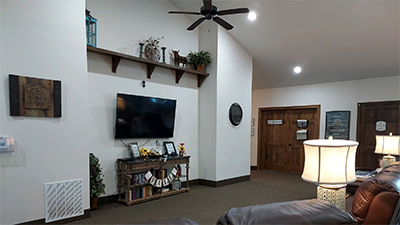
In a 60 or 90 bed assisted living facility, even with a designated memory care wing, the default pattern looks like a little hospital. Intercom calls, personnel running down halls, rotating aides who hardly understand citizens' histories, and group activities planned to corral as many individuals as possible into one space. It can work, especially for people in early stages who still flourish in vibrant environments, however it likewise produces friction.
By contrast, a 10 or 12 resident shop home feels much closer to a prolonged household. Breakfast may be staggered. A resident who gets up confused does not need to browse a long corridor to find assistance; personnel remain in the exact same common area, typically within sight or earshot. Familiar faces manage almost every interaction, from bathing to bedtime.
When dementia advances into moderate and later phases, that sense of "I understand this space, I understand these people" minimizes agitation and the habits that generally drive households to seek greater levels of dementia care.
A various type of threat management
In big communities, risk is generally handled with systems: door alarms, wander guards, habits charts, rigorous medication schedules, and fixed staffing grids. Required tools, however when they control the culture, citizens can feel more like liabilities than people.
Smaller homes lean more greatly on relational danger management. Staff learn that Mrs. K becomes agitated around 4 p.m. And will try the back gate if she has actually not had a walk by 3. They understand that Mr. D calls out at night if the corridor light is off, but sleeps peacefully if a soft nightlight stays on. That knowledge indicates less "events" in the very first place, and less need to respond with restraints, sedating medications, or healthcare facility transfers.
Neither technique is ideal. Boutique homes can have a hard time when a resident's habits becomes considerably aggressive or sexually disinhibited. Huge settings, on the other hand, can keep clinically intricate homeowners safe but may need to sacrifice individual choice and spontaneity. The ideal match depends on the person, the stage of disease, and the family's priorities.
How care looks various day to day
From the outdoors, every senior care choice tends to promote comparable functions: 24/7 staffing, meals, activities, medication management. The distinctions appear in the texture of everyday life.
Knowing the individual, not just the diagnosis
Good dementia care starts with a detailed life story, not simply a list of diagnoses and prescriptions. Shop homes usually have the capability to integrate that history into everyday routines.
In a 10 resident home I spoke with, personnel knew that a person resident, a retired baker, would end up being visibly calmer if she could "help" in the cooking area. She might not safely utilize the oven any longer, however the caregivers provided her a mixing bowl, flour, sugar, and a spoon at 2 p.m. A lot of days. On paper, that looked like "afternoon activity." In useful terms, it was targeted sign management using her identity and old muscle memory.
In a 60 bed building where I had worked previously, the exact same lady would likely have been placed in a general activities group: bingo or chair workout. The personnel did not have the time or ratios to individualize at that level for many residents.
The real advantage of a small home is not a premium menu or designer furnishings, it is the breathing room to ask "who was this individual before dementia?" and after that act on the answer.
Handling care jobs without removing dignity
Nobody likes being bathed, dressed, or toileted by a stranger. For somebody already confused by dementia, those interactions can trigger fear, fight, or flight.
In shop memory care homes, a few patterns senior living aid:
Staff consistency. The very same caretakers aid with intimate care day after day. Residents discover voices, regimens, and touch. This familiarity can significantly reduce resistance to care.
Flexible timing. If Mr. L dislikes morning showers, a little home can frequently change the schedule so he showers in the evening, when he is more relaxed. In a large assisted living facility with tight staffing blocks, that sort of accommodation is harder.
Choice within structure. Locals might pick between two clothing instead of dealing with a full closet, or choose whether they desire coffee before or after getting dressed. These are small decisions, however they reinforce control and selfhood.
I have actually seen homeowners identified "declines care" in one setting become cooperative and even joyful when those 3 components remained in location. Very same individual, very same dementia, different environment.
The function of environment in memory care
Families often concentrate on visible features: tidiness, design, and space size. Those matter, however in dementia care, subtle ecological details carry more weight.
Design that decreases confusion
Boutique memory care homes have a chance to embed dementia-sensitive design from the ground up. Some of the most helpful style components include:
Visual clearness. Bold, contrasting colors for bathroom doors, toilets, and handrails help residents recognize crucial features. Hectic patterns on flooring or upholstery can be disorienting for somebody who misinterprets contrast as actions or holes.
Short sightlines. In a little home, homeowners can normally see an employee, a restroom, and a comfortable chair from practically any point. That decreases roaming and "exit-seeking," because help feels close and obvious.
Familiar scale. A living-room that appears like a household home invites regular behavior. A vast lobby or cafeteria can seem like an airport, and people with dementia typically mirror that sense of being "in transit" and unsettled.
Outdoor gain access to. Safe, enclosed outside spaces enable citizens to walk, garden gently, or being in the sun. Motion and daylight have direct impacts on sleep cycles, state of mind, and hunger, especially for individuals on the spectrum of dementia.
I have walked into store homes that felt like genuine homes, with the smells, sounds, and lighting of an active home. Homeowners moved more naturally there, compared with the stiff, reluctant gait I frequently saw in long, sterilized corridors elsewhere.
Sensory load and behavior
Dementia lowers the brain's capability to filter sound and visual info. A dining-room with clattering meals, blasting televisions, and continuous movement can tip a resident from calm to combative in minutes.
Boutique homes typically keep the sensory load lower: fewer individuals, quieter meal service, staff who can intervene rapidly when stress begins to build. They can turn the television off. They can put on a resident's preferred music at a low volume. They can dim severe overhead lights during sundowning hours.
Behavioral "problems" frequently look various when the environment is not constantly activating the nervous system.
Staffing, training, and turnover
The strength of any senior care alternative rests heavily on the frontline personnel. Licenses and facilities look outstanding to families, however the people who show up at 10 p.m. On a Tuesday will form your loved one's days and nights.
Ratios and genuine availability
Boutique memory care homes often staff at ratios like 1 caregiver for 4 to 6 locals throughout the day, somewhat less in the evening. In larger assisted living memory units, ratios of 1 to 8 or 1 to 12 prevail, with a nurse covering many more homeowners across the building.
In useful terms, that distinction affects:
Response time. When Mrs. K stands from her chair without her walker, somebody can reach her in seconds, not minutes. That implies fewer falls, less journeys to the emergency clinic, and less fear.
Depth of relationship. Personnel can invest 5 extra minutes talking throughout medication time, which may keep a resident settled through the afternoon, rather of trying to "capture up" on behavior later.
Ability to de-escalate. With less locals to watch, a caretaker can walk with somebody who is pacing, rather of rerouting them sharply and hurrying back to other tasks. Numerous behavioral outbursts never develop when early agitation gets a gentle response.
Ratios alone do not guarantee good care. Skill, training, and management matter. But if there is simply inadequate personnel time in the day, even the most caring assistants can not provide meaningful, person-centered dementia care.
Specialized dementia training
Assisted living regulations vary by state, but in many areas the required training hours on dementia care are very little. Facilities can technically adhere to the law while leaving staff mainly unprepared for the realities of memory loss, paranoia, repeated questions, or personal boundary issues.
Boutique memory care homes that take their mission seriously usually invest more greatly in ongoing education. They teach staff methods like:
Using recognition instead of confrontation when a resident confuses previous and present.
Managing "watching" behavior, where a resident follows personnel all over, without shaming or rejecting them.
Supporting households through interaction about progression, not just logistics.
The staff who grow in these homes often take authentic pride in their skill with intricate behaviors. That pride reduces burnout, which in turn decreases turnover. Lower turnover means citizens see the same faces for months or years, another supporting factor.
When boutique homes are not the best fit
It is tempting to deal with store memory care as a universal response. It is not. Some situations lean towards larger settings or different kinds of care.
People with really high medical needs in some cases need the resources of a nursing home or hospital-based dementia care system. A small home might not have on-site nurses 24/7 or the equipment required to handle regular IV medications, dialysis coordination, or complex wound care.
Residents with extreme behavioral expressions, such as violent aggressiveness that endangers others, might surpass what a small home can securely accommodate. In those cases, a secure, specific behavioral system can offer the staff depth and psychiatric assistance required to stabilize the situation.
Cost is another limiting element. Store homes tend to run greater per month than basic assisted living, mainly due to staffing. That cost reflects real value, however not every family can afford it, and subsidies or Medicaid coverage can be restricted in some regions.
Finally, some people really take pleasure in larger, busier environments. A retired instructor who enjoys noise, kids, and constant activity may discover a little, quiet home stifling, a minimum of in the earlier stages of dementia.
The objective is not to chase a pattern, but to align the setting with the person's history, personality, and care trajectory.
The role of respite care in evaluating the waters
Many families are not prepared to commit to a full-time relocation, yet home caregiving has ended up being frustrating. Short-term respite care can offer a bridge.
Some shop memory care homes provide respite remains ranging from a few days to numerous weeks. The resident relocations in momentarily, gets the full suite of services, then returns home.
Respite can assist in numerous ways:
It provides the primary caregiver time to recuperate physically and mentally, or to manage their own health concerns or travel.
It tests how the individual with dementia reacts to common living, structured routines, and expert memory care.
It enables staff to observe the resident's needs in detail, helping the family strategy realistically for future care, whether in the house or in a community.
I have actually dealt with families who utilized three or four respite remains over a year to slowly adapt a parent to a shop home. By the time a long-term move made the most sense, the faces and layout were already familiar. That lowered the shock of shift significantly.
How to assess a shop memory care home
Marketing language and tours can obscure as much as they expose. A few targeted questions and observations generally cut through the polish. Utilized thoroughly, a short list can avoid hurried decisions.
Here is an easy set of things to search for:
- Ask about personnel ratios by shift, not simply total numbers, and clarify whether these are normal or best-case figures.
- Watch how staff engage with current citizens: do they use names, make eye contact, and react to repeated questions with patience instead of irritation.
- Review how the home deals with medical modifications, including who coordinates with medical professionals, how after-hours concerns are handled, and when they recommend a greater level of care.
- Look for evidence of individualized regimens in activities, meal patterns, and room setups, instead of one-size-fits-all schedules.
- Talk with at least one current family, if possible, about communication, responsiveness, and how the home has dealt with tough moments, not just day-to-day routines.
The way management responds to these questions often tells you more than the actual material of the answers. Transparency, uniqueness, and a determination to go over trade-offs are green flags.
Integrating household and maintaining identity
One of the greatest worries households reveal when moving a loved one into memory care is, "Will they forget who we are?" The disease itself affects memory, however the environment can either crowd out household relationships or nurture them.
Boutique memory care homes have a benefit in this area because they can weave household into the rhythm of the home more naturally. When only a lots residents live there, personnel rapidly discover who the daughter is, who the grand son is, even which family members activate stress and anxiety. Visits enter into the story of the family, not a series of transactions at a front desk.
Practical methods that work well consist of:
Flexible checking out hours and areas that appreciate privacy while keeping citizens safe.
Care plan conferences that consist of not just medical updates, however discussions about developing preferences, regimens, and interaction styles.
Support for family routines, such as bringing a preferred meal on birthdays, viewing a specific sports team together, or attending spiritual services essentially or onsite.
For one gentleman I supported, a retired pastor with advancing Alzheimer's, the little home arranged a weekly "service" in the living-room. Family and personnel would join, he would read familiar passages from large-print bible, and homeowners sang basic hymns. It did not match his pre-dementia sermons in intricacy, but it maintained something core to his identity. A big center may have used a generic service, but the intimacy and control he felt because little circle were different.

When households see that type of attention, they worry less about "positioning" someone and more about partnering with a team.
The larger photo of senior care choices
Boutique memory care homes sit within a bigger continuum of senior care that consists of in-home support, independent living, standard assisted living, experienced nursing, and hospice. No single option solves every problem.
For early-stage dementia, a mix of in-home aides, adult day programs, and household assistance may keep someone safe and engaged for several years. As needs increase, assisted living settings with memory care systems can provide structure and security at a relatively moderate cost.
Boutique homes come into their own for people whose cognitive difficulties outmatch what basic assisted living can manage, yet who still gain from a home-like setting and intensive relational care. They work as a middle path in between home and the most institutional environments.
The finest outcomes I have seen do not come from discovering the "perfect" neighborhood, but from sincere assessment and timely adjustment. Households that check in routinely, stay in interaction with personnel, and reassess as dementia progresses tend to navigate the shifts with less trauma.
Boutique memory care homes make that procedure more humane by protecting uniqueness and connection in the middle of significant loss. They can not stop the progression of dementia, but they can change the lived experience of that journey, for both the person and the family standing next to them.
BeeHive Homes of Plainview provides assisted living care
BeeHive Homes of Plainview provides memory care services
BeeHive Homes of Plainview provides respite care services
BeeHive Homes of Plainview supports assistance with bathing and grooming
BeeHive Homes of Plainview offers private bedrooms with private bathrooms
BeeHive Homes of Plainview provides medication monitoring and documentation
BeeHive Homes of Plainview serves dietitian-approved meals
BeeHive Homes of Plainview provides housekeeping services
BeeHive Homes of Plainview provides laundry services
BeeHive Homes of Plainview offers community dining and social engagement activities
BeeHive Homes of Plainview features life enrichment activities
BeeHive Homes of Plainview supports personal care assistance during meals and daily routines
BeeHive Homes of Plainview promotes frequent physical and mental exercise opportunities
BeeHive Homes of Plainview provides a home-like residential environment
BeeHive Homes of Plainview creates customized care plans as residents’ needs change
BeeHive Homes of Plainview assesses individual resident care needs
BeeHive Homes of Plainview accepts private pay and long-term care insurance
BeeHive Homes of Plainview assists qualified veterans with Aid and Attendance benefits
BeeHive Homes of Plainview encourages meaningful resident-to-staff relationships
BeeHive Homes of Plainview delivers compassionate, attentive senior care focused on dignity and comfort
BeeHive Homes of Plainview has a phone number of (806) 452-5883
BeeHive Homes of Plainview has an address of 1435 Lometa Dr, Plainview, TX 79072
BeeHive Homes of Plainview has a website https://beehivehomes.com/locations/plainview/
BeeHive Homes of Plainview has Google Maps listing https://maps.app.goo.gl/UibVhBNmSuAjkgst5
BeeHive Homes of Plainview has Facebook page https://www.facebook.com/BeeHivePV
BeeHive Homes of Plainview has an YouTube page https://www.youtube.com/@WelcomeHomeBeeHiveHomes
BeeHive Homes of Plainview won Top Assisted Living Homes 2025
BeeHive Homes of Plainview earned Best Customer Service Award 2024
BeeHive Homes of Plainview placed 1st for Senior Living Communities 2025
People Also Ask about BeeHive Homes of Plainview
What is BeeHive Homes of Plainview Living monthly room rate?
The rate depends on the level of care that is needed. We do an initial evaluation for each potential resident to determine the level of care needed. The monthly rate is based on this evaluation. There are no hidden costs or fees
Can residents stay in BeeHive Homes until the end of their life?
Usually yes. There are exceptions, such as when there are safety issues with the resident, or they need 24 hour skilled nursing services
Do we have a nurse on staff?
No, but each BeeHive Home has a consulting Nurse available 24 – 7. if nursing services are needed, a doctor can order home health to come into the home
What are BeeHive Homes’ visiting hours?
Visiting hours are adjusted to accommodate the families and the resident’s needs… just not too early or too late
Do we have couple’s rooms available?
Yes, each home has rooms designed to accommodate couples. Please ask about the availability of these rooms
Where is BeeHive Homes of Plainview located?
BeeHive Homes of Plainview is conveniently located at 1435 Lometa Dr, Plainview, TX 79072. You can easily find directions on Google Maps or call at (806) 452-5883 Monday through Sunday 9:00am to 5:00pm
How can I contact BeeHive Homes of Plainview?
You can contact BeeHive Homes of Plainview by phone at: (806) 452-5883, visit their website at https://beehivehomes.com/locations/plainview/, or connect on social media via Facebook or YouTube
Residents may take a trip to the The Museum of the Llano Estacado . The Museum of the Llano Estacado offers regional history exhibits that create an engaging yet manageable outing for assisted living, memory care, senior care, elderly care, and respite care residents.